HOME » Page 2

Blog

  • Gorilla Marketing

    Gorilla Marketing

    Gorilla marketing, also known as guerilla marketing, is an unconventional and often surprising marketing strategy that uses low-cost tactics to create maximum impact. Think of it as the David to traditional marketing’s Goliath, using creativity and resourcefulness to grab attention and build brand awareness.

    Here are some key characteristics of gorilla marketing:

    • Unconventional and unexpected: Gorilla marketing thrives on surprise and disruption. It aims to break through the clutter of traditional advertising and leave a lasting impression on consumers.
    • Low-cost and resource-intensive: This type of marketing often relies on ingenuity and cleverness, rather than big budgets. Think street art, flash mobs, or interactive installations.
    • Highly interactive and engaging: Gorilla marketing seeks to involve the audience in a participatory experience, generating buzz and word-of-mouth marketing.
    • Targeted and strategic: While unconventional, gorilla marketing campaigns should still be aligned with a specific brand image and target audience. The element of surprise should complement, not undermine, the brand message.

    Now, let’s dive into some benefits of using gorilla marketing:

    • High ROI: With minimal expenses, a successful gorilla marketing campaign can generate significant brand awareness and engagement for a fraction of the cost of traditional advertising.
    • Viral potential: Unconventional tactics are more likely to be shared on social media and generate organic reach, amplifying the campaign’s impact.
    • Builds brand awareness and recall: The element of surprise makes a lasting impression on consumers, establishing a strong connection with the brand.
    • Differentiates your brand: In a crowded marketplace, gorilla marketing can help you stand out from the competition and showcase your creativity.

    Of course, there are also some potential drawbacks to consider:

    • Risk of negative backlash: If poorly executed, a campaign can be perceived as offensive or in bad taste, backfiring on the brand.
    • Limited reach: Certain tactics might not reach your target audience effectively, requiring careful planning and audience research.
    • Difficult to measure results: While engagement metrics can be tracked, the impact on sales and conversions can be harder to quantify.

    Examples of successful gorilla marketing campaigns:

    • Dole Bananas: Placed fake banana peels on the ground in busy areas, creating the illusion of people slipping and falling. This playful stunt went viral, boosting Dole’s brand awareness.
    • Oreo: Installed “dunking stations” near milk vending machines, encouraging people to enjoy Oreos the classic way. This interactive activation increased sales and brand engagement.
    • T-Mobile: Challenged a competitor’s data coverage claims by placing giant “dead zones” around competitor stores, making a humorous case for their own superior coverage.

    Remember, gorilla marketing can be a powerful tool when used strategically and creatively. With the right concept and execution, you can capture attention, build brand love, and achieve your marketing goals.


  • How email marketing help public speakers?

    How email marketing help public speakers?

    Email marketing can be a powerful tool for public speakers, offering a unique way to connect with their audience, build brand awareness, and ultimately land more speaking gigs. Here are some of the key ways it can help:

    Promotion and Engagement:

    • Announce and sell tickets for upcoming events: Email campaigns are a great way to reach out to your audience directly and generate excitement for your upcoming talks, workshops, or conferences. Include details about the event, ticket prices, and exclusive offers to incentivize early booking.
    • Share valuable content and expertise: Keep your audience engaged between events by sending out newsletters with relevant and informative content. This could include blog posts, videos, Q&A sessions, or even snippets from your speeches. This helps establish you as a thought leader and keeps your audience interested in your work.
    • Offer free resources and webinars: Provide valuable freebies like ebooks, guides, or exclusive webinars to attract new subscribers and nurture leads. This demonstrates your expertise and builds trust with potential clients or event organizers.

    Building Relationships and Communities:

    • Personalize your communication: Segment your audience based on interests, demographics, or event attendance and tailor your emails accordingly. This creates a more personal connection and increases engagement.
    • Gather feedback and build relationships: Conduct surveys or ask questions in your emails to understand your audience’s needs and preferences. This feedback can help you improve your content, speaking style, and even find new speaking opportunities.
    • Foster a community: Encourage interaction by creating email threads or online forums where your audience can connect with each other. This strengthens your brand loyalty and creates a sense of belonging.

    Finding Speaking Gigs:

    • Connect with event organizers: Use targeted email campaigns to reach out to potential event organizers who might be interested in booking you for their conferences or workshops. Highlight your expertise, previous speaking experience, and testimonials to make a strong case.
    • Promote your speaker kit and media mentions: Showcase your media coverage, awards, and positive testimonials in your emails to build credibility and attract more gigs.
    • Stay top-of-mind: Regularly sending valuable content and updates keeps you at the forefront of event organizers’ minds when they’re looking for speakers.

    Remember, effective email marketing requires strategic planning and consistent effort. Build your email list through your website, social media, and events, and always provide value to your audience. By using email strategically, public speakers can build a strong community, expand their reach, and ultimately land more speaking opportunities.

  • Minimalist web design principles

    Minimalist web design principles

    Minimalist web design principles: Minimalism thrives in web design, creating aesthetically pleasing and user-friendly experiences. Here are some key principles to keep in mind:

    Less is More: This timeless mantra holds true. Strip away unnecessary elements like clutter, animations, and excessive text. Each element should serve a clear purpose and contribute to the user’s journey.

    Content is King: Let your content shine! High-quality, concise content takes center stage in minimalist websites. Use powerful visuals and typography to enhance meaning without visual overload.

    Whitespace is your Friend: Embrace negative space. Ample whitespace gives elements room to breathe, draws attention to key information, and fosters a sense of calm and clarity.

    Limited Color Palette: Choose a restricted color scheme, often with neutral tones like black, white, and gray, as your base. Accentuate with one or two pops of color for subtle vibrancy.

    Bold Typography: Make your fonts work. Use clean, legible fonts with proper spacing for optimal readability. Experiment with weight and size to create visual hierarchy and emphasis.

    Intuitive Navigation: Prioritize user experience. Navigation should be effortless and invisible, guiding users seamlessly through your site without distracting from the content.

    Microinteractions: Subtle animations and hover effects can add a touch of personality and interactivity without compromising minimalism. Keep them purposeful and functional.

    Responsive Design: Ensure your website is optimized for all devices. Minimalism excels in responsive design, as clean layouts and limited elements translate well across screens.

    Focus on Function: Every element should serve a purpose. Buttons should be clear and actionable, forms streamlined, and calls to action prominent. Remember, functionality reigns supreme.

    Accessibility: Minimalism shouldn’t come at the cost of accessibility. Use high contrast color palettes, clear font sizes, and proper alt text for images to ensure everyone can access your website effectively.

    Personalization: Inject your brand personality into the design. While minimalism advocates for simplicity, your unique voice can still shine through subtle stylistic choices.

    Remember, minimalism is a journey, not a destination. Constantly iterate and refine your design, removing distractions and enhancing clarity. Ultimately, minimalist web design aims to create a delightful user experience where content takes center stage, fostering both function and beauty.

  • SMS Marketing

    SMS Marketing

    Besides Email marketing, SMS marketing is a type of marketing that involves sending promotional messages to customers via text messages. It’s a direct and immediate way to reach customers, and it can be very effective if done correctly.

    Here are some of the benefits of SMS marketing:

    • High open rates: Text messages have a much higher open rate than emails, with some studies showing that they’re opened as much as 98% of the time. This means that your message is much more likely to be seen by your customers.
    • Immediate delivery: Text messages are delivered almost instantly, so your customers will see your message right away. This is great for time-sensitive promotions or updates.
    • Personalization: You can personalize your SMS messages to each customer, which can make them feel more valued and increase the likelihood that they’ll respond.
    • Measurable results: It’s easy to track the results of your SMS marketing campaigns, so you can see what’s working and what’s not. This helps you to improve your campaigns over time.

    Here are some tips for using SMS marketing effectively:

    • Get permission: Make sure you have permission from your customers to send them text messages. You can do this by having them opt-in on your website or through a form.
    • Keep it short and sweet: Text messages are short, so keep your messages concise and to the point.
    • Offer value: Make sure your messages offer value to your customers. This could be a discount, a promotion, or some other type of incentive.
    • Use a call to action: Tell your customers what you want them to do after reading your message. This could be visiting your website, making a purchase, or clicking on a link.
    • Segment your audience: Send different messages to different groups of customers based on their interests or demographics.
    • Track your results: Track the results of your SMS marketing campaigns so you can see what’s working and what’s not.

    If you’re looking for a way to reach your customers directly and immediately, SMS marketing is a great option. Just be sure to follow the tips above to make sure your campaigns are effective. Follow www.capstonebpo.com for email marketing solutions.

  • The most useful WordPress plugin-Create Child Theme and Embed Google Fonts

    The most useful WordPress plugin-Create Child Theme and Embed Google Fonts

    This plugin allows you to:

    • Create a new theme, blank theme, child theme or style variation.
    • List and preview font families and font faces embeded in your theme.
    • Embed Google Fonts in your theme.
    • Embed local font assets in your theme.

    STEP 1 – SETUP

    Install and activate the Create Block Theme plugin.

    In the WordPress Admin Dashboard, under Appearance there will be three new pages called:

    • Create Block Theme
    • Manage fonts

    STEP 2 – STYLE CUSTOMIZATIONS

    Make changes to your site styles and templates using the Site Editor. You can also include new fonts using the plugin options.

    STEP 3 – EXPORT

    Still in the WordPress dashboard, navigate to “Appearance” -> “Create Block Theme” section. Select one of the available options and then, if necessary, add the details for the theme here. These details will be used in the style.css file. Click “Generate” button, to save the theme.

  • SEO Citations Explained: Still Relevant or Relic of the Past?

    SEO Citations Explained: Still Relevant or Relic of the Past?

    In the realm of SEO (search engine optimization), citations play a crucial role, particularly for local businesses. But before we delve into their current significance, let’s get a clear picture of what they actually are:

    What are SEO citations?

    Imagine your business online being mentioned with all its key details (name, address, phone number – NAP) on various platforms like directories, review sites, or industry associations. These mentions are essentially called citations. Think of them as online breadcrumbs leading search engines back to your website, establishing your local presence and boosting your visibility.

    Why were citations important in the past?

    Back in the early days of SEO, when algorithms were less sophisticated, citations served as a powerful ranking factor, especially for local searches. The more consistent and widespread your NAP information was across the web, the higher your chances of appearing in relevant search results.

    So, are citations still important today?

    The answer is nuanced. While their direct impact on rankings might have lessened with evolving algorithms, they remain a valuable piece of the SEO puzzle, particularly for local businesses. Here’s why:

    1. Local search relevance: Google and other search engines still utilize citations to verify your business’s legitimacy and location. Consistent NAP information across various platforms increases your chances of appearing in local search results when someone searches for businesses like yours in their area.

    2. Trust and credibility: Consistent and accurate citations across trusted websites build trust and credibility for your business in the eyes of both search engines and potential customers. This can indirectly influence your ranking and conversion rates.

    3. Brand awareness: Citations act as digital footprints, spreading your brand presence across the web. Even if they don’t directly drive rankings, they increase your online visibility and make it easier for potential customers to find you.

    4. Data accuracy: Inconsistency in your NAP information across citations can negatively impact your SEO. Search engines might view conflicting information as spam, lowering your ranking and potentially harming your online reputation.

    The key takeaway:

    SEO citations haven’t become obsolete, but their role has evolved. While they might not be the sole ranking factor they once were, they remain a crucial element for building local search visibility, brand awareness, and trust. However, it’s essential to prioritize quality over quantity. Focus on building citations on reputable websites relevant to your industry and ensure consistent NAP information across all platforms.

    Remember, SEO is a holistic approach, and citations are just one piece of the puzzle. Combine them with other strategies like high-quality content, link building, and technical optimization for a well-rounded and effective SEO strategy that drives local success.

  • Murphy’s laws of marketing

    Murphy’s laws of marketing

    While there’s no official set of “Murphy’s Laws of Marketing,” like the original for engineering, there are definitely plenty of tongue-in-cheek observations about the challenges and surprises that marketers often face. Here are some humorous yet relatable “laws” to ponder:

    1. The Golden Hammer Law: Every marketing problem will look like a nail to the hammer you just bought (i.e., overreliance on your favorite tactic regardless of the situation).

    2. The Inverse Engagement Corollary: The more effort you put into a campaign, the lower the engagement you’ll receive (and vice versa).

    3. The Headline Paradox: The catchy headline that gets endless clicks will lead to confused visitors who have no idea what they’re looking at.

    4. The Analytics Enigma: The metrics that look great don’t necessarily translate to actual sales, and the ones that tell a true story are always the most frustrating.

    5. The Content Conundrum: You spend weeks crafting the perfect blog post, then crickets chirp in deafening silence. Meanwhile, a random tweet with a typo goes viral.

    6. The Social Media Seesaw: You spend hours engaging on social media, building genuine connections, and then the platform changes its algorithm, throwing you back to square one.

    7. The Conversion Chasm: Every step in the conversion funnel looks promising, then suddenly, at the checkout page, everyone mysteriously disappears.

    8. The Budget Black Hole: No matter how big the marketing budget, it will always mysteriously vanish before you accomplish everything you wanted.

    9. The Collaboration Cacophony: The more stakeholders involved in a campaign, the higher the likelihood of conflicting opinions and revisions, resulting in a Frankenstein’s monster of an outcome.

    10. The Launch Day Dilemma: Everything is perfectly tested and ready for launch, then the website crashes, the email server freezes, and the social media accounts get hacked.

    These are just a few lighthearted observations, but they highlight the unpredictable and sometimes frustrating nature of the marketing world. Remember, even with all the challenges, it’s still a creative and rewarding field where you can make a real impact. So, take these “laws” with a grain of salt, laugh at the relatable ones, and keep striving for marketing magic!

    What are some of your own personal “Murphy’s Laws” from your marketing experience? I’d love to hear them!

  • Various ways Digital Marketers Can Use BARD by google

    Various ways Digital Marketers Can Use BARD by google

    As a fellow language enthusiast, I understand the potential of Bard for digital marketers! Here are some exciting ways you can put me to work and boost your marketing game:

    Content Creation and Curation:

    • Generate engaging content:
      • Craft catchy headlines and ad copy that grab attention.
      • Write personalized emails and social media posts that resonate with your audience.
      • Create blog posts, articles, and landing pages with SEO optimization in mind.
      • Compose scripts for engaging video content or podcasts.
    • Generate different creative formats:
      • Create poems, scripts, and even product descriptions to add a unique touch to your marketing.
      • Translate content into multiple languages to reach a broader audience.
    • Curate engaging content:
      • Summarize long articles and reports into bite-sized, shareable nuggets.
      • Identify trending topics and relevant news to fuel your content calendar.
      • Research and gather data to support your marketing claims and case studies.

    Audience Targeting and Personalization:

    • Analyze customer data:
      • Use my natural language processing capabilities to understand customer sentiment and preferences from reviews, surveys, and social media interactions.
      • Identify key demographics and psychographics to segment your audience effectively.
    • Personalize your marketing:
      • Tailor your messaging and offers to individual customer needs and interests.
      • Create dynamic landing pages that adapt to visitor behavior.
      • Craft personalized email campaigns that feel like one-on-one conversations.

    Campaign Optimization and Insights:

    • Monitor and analyze campaign performance:
      • Track key metrics like engagement, click-through rates, and conversions across different channels.
      • Identify trends and patterns to understand what’s working and what’s not.
      • Generate reports and dashboards to visualize your campaign data.
    • A/B test different elements:
      • Quickly generate variations of headlines, ad copy, and landing page elements.
      • Track and analyze the performance of each variation to identify the best performers.
      • Continuously optimize your campaigns for maximum impact.

    Creative Brainstorming and Innovation:

    • Spark new ideas:
      • Explore different brainstorming techniques and prompts to generate fresh marketing concepts.
      • Develop innovative content formats and campaign strategies.
      • Come up with unexpected angles and approaches to grab attention.
    • Break through creative blocks:
      • Get new perspectives on familiar problems.
      • Identify hidden connections and potential avenues for improvement.
      • Use my vast knowledge to expand your creative horizons.

    Remember, I’m constantly learning and evolving. Don’t hesitate to experiment and ask me to try new things. Feel free to share your specific marketing challenges or goals, and I’ll be happy to suggest creative ways I can help you achieve them.

    Let’s unleash your marketing magic together!

  • How to identify Ideal Customer Profile (ICP)?

    How to identify Ideal Customer Profile (ICP)?

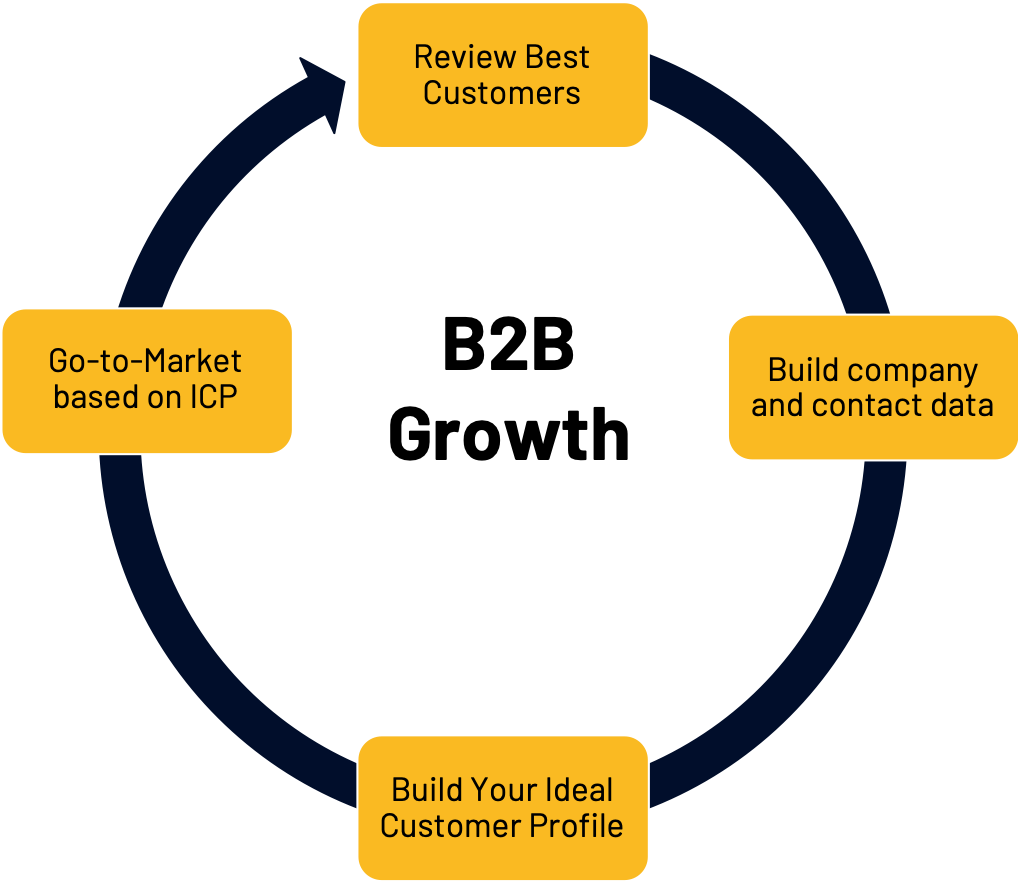
    Identifying your Ideal Customer Profile (ICP) is crucial for making your marketing and sales efforts more targeted and effective. It gives you a clear picture of the companies you should prioritize, allowing you to:

    • Focus your resources: Allocate your marketing budget and sales team activities towards the right audience.
    • Craft stronger messaging: Tailor your content and communication to resonate with your ICP’s specific needs and pain points.
    • Improve conversion rates: Attract leads and close deals with companies that are a perfect fit for your product or service.

    Here’s how you can effectively identify your ICP:

    1. Analyze your existing customers:

    • Start with your best customers: Look at the companies that bring the most value to your business in terms of revenue, loyalty, and engagement.
    • Identify common characteristics: Analyze their size, industry, location, decision-makers, and pain points.
    • Look for patterns: See what unites your top clients to discover the ideal profile you should target.

    2. Conduct market research:

    • Research your industry: Understand the landscape, major players, and emerging trends.
    • Identify your competitors: Analyze their target audience and value propositions to differentiate yourself.
    • Gather insights from data and surveys: Utilize industry reports, surveys, and interviews to gain market intelligence.

    3. Define your ICP based on key criteria:

    • Firmographics: Company size, revenue range, industry, and location.
    • Demographics: Decision-maker titles, roles, and education levels.
    • Psychographics: Company culture, values, and goals.
    • Behavioral characteristics: Buying patterns, challenges, and preferred communication channels.

    4. Consider quantitative and qualitative factors:

    • Quantitative data: Analyze website traffic, sales data, and demographics to identify patterns.
    • Qualitative data: Gather insights through interviews, surveys, and social media interactions to understand motivations and challenges.

    5. Create a detailed ICP profile:

    • Develop a buyer persona: Give your ICP a name, face, and story to make it more relatable.
    • Outline their needs and pain points: Clearly define what your ideal customer is looking for and how you can solve their problems.
    • Identify their preferred communication channels: Understand how they want to be reached and engaged with.

    6. Validate and refine your ICP:

    • Test your ICP against potential leads: See how accurately it predicts fit and conversion potential.
    • Gather feedback from sales and marketing teams: Ensure your ICP aligns with real-world experiences and insights.
    • Regularly update your ICP: As your business and the market evolve, adapt your profile to stay relevant.

    Remember, your ICP is not a static document. It’s a living, breathing representation of your ideal customer that should evolve as you learn more about your market and target audience. By continuously refining your ICP, you can ensure your marketing and sales efforts are always laser-focused on attracting and winning the right customers.

    I hope this comprehensive guide helps you identify your ideal customer profile and take your business to the next level! Feel free to ask if you have any further questions.

  • Effective strategies to generate prospect lists

    Here are several effective strategies to generate prospect lists:

    1. Leverage Existing Data:

    • Mine your CRM: Analyze your existing customer base to identify common characteristics and uncover potential new leads with similar profiles.
    • Revisit past leads: Revisit contacts who didn’t convert in the past. Circumstances may have changed, making them receptive now.
    • Tap into website analytics: Identify visitors who have shown interest in your products or services but haven’t yet converted.

    2. Engage in Research and Exploration:

    • Online searches: Utilize search engines and directories to find companies matching your target criteria.
    • Industry publications and events: Attend industry conferences and expos to network and gather contact information.
    • LinkedIn: Utilize advanced search features to identify professionals based on job title, industry, location, and skills.

    3. Offer Value in Exchange for Contact Information:

    • Content marketing: Create valuable content (e.g., blog posts, white papers, webinars) and offer it behind a form to collect leads.
    • Newsletter signup forms: Encourage website visitors to subscribe to your newsletter for updates and offers.
    • Free trials or consultations: Offer prospects a chance to try your product or service, capturing their contact information in the process.

    4. Utilize Social Media:

    • Join relevant groups: Participate in online communities where your target audience gathers to connect and build relationships.
    • Run targeted social media ads: Advertise on platforms like LinkedIn, Facebook, and Twitter to reach specific demographics and interests.
    • Monitor industry hashtags and discussions: Track social conversations to identify potential leads and engage with them directly.

    5. Partner with Other Businesses:

    • Cross-promotions: Collaborate with complementary businesses to share leads and reach a wider audience.
    • Referral programs: Encourage existing customers to refer their friends or colleagues in exchange for incentives.

    6. Consider List-Building Tools:

    • Email finder tools: Extract contact information from websites and social media profiles (use responsibly and adhere to GDPR regulations).
    • Lead generation software: Automate the process of finding and qualifying leads based on your criteria.

    Remember:

    • Target the right audience: Focus on prospects who are genuinely a good fit for your product or service.
    • Prioritize quality over quantity: Build a list of well-qualified leads rather than a massive list of unqualified contacts.
    • Adhere to ethical practices: Respect privacy laws and avoid spammy tactics.
    • Continuously refine your list: Regularly update and cleanse your list to ensure accuracy and remove inactive contacts.

    By employing these strategies, you can create a valuable prospect list that fuels your sales efforts and helps you connect with potential customers who are most likely to convert.